
Candlestick Pattern
Bullish
Morning Star Candlestick मॉर्निंग स्टार कैंडलस्टिक
A three-candle bullish reversal pattern that forms after a downtrend. तीन-कैंडल वाला बुलिश रिवर्सल पैटर्न जो डाउनट्रेंड के बाद बनता है
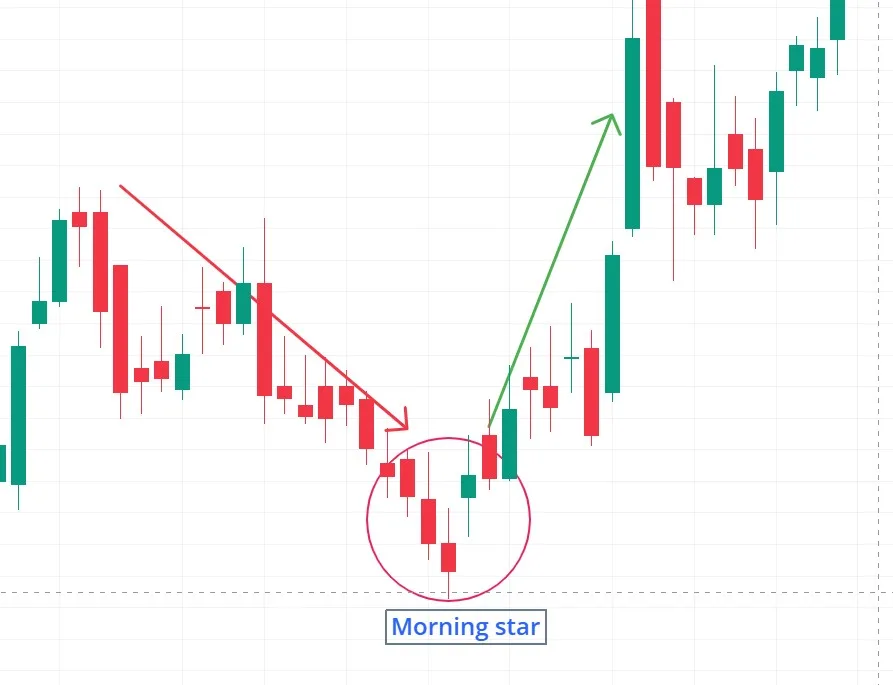
Pattern Overview
Definition & Type
- A three-candle bullish reversal pattern that forms after a downtrend.
- Signals potential trend reversal from bearish to bullish.
- Considered one of the most reliable reversal patterns.
General Reliability
- Highly reliable, especially when confirmed by volume and other indicators.
- Most effective when appearing at key support levels or in oversold conditions (RSI < 30).
Formation & Structure
Formation
- Number of Candles: 3 (bearish, indecision, bullish).
- Visual Description:
- First candle: Strong bearish (red/black) candle, confirming the downtrend.
- Second candle: Small-bodied candle (doji or spinning top) showing indecision, gapping down from the first candle.
- Third candle: Strong bullish (green/white) candle that closes at least halfway into the first candle's body.
- Key Identification Criteria:
- Must occur after a sustained downtrend.
- The second candle should show a gap down from the first candle.
- The third candle must show strong bullish momentum.
Psychological Interpretation
- Market Sentiment:
- Initial selling pressure (first candle) weakens as indecision sets in (second candle).
- Buyers take control (third candle), signaling a potential trend reversal.
- Buyers vs. Sellers:
- Increasing volume on the third candle confirms strong buying interest.
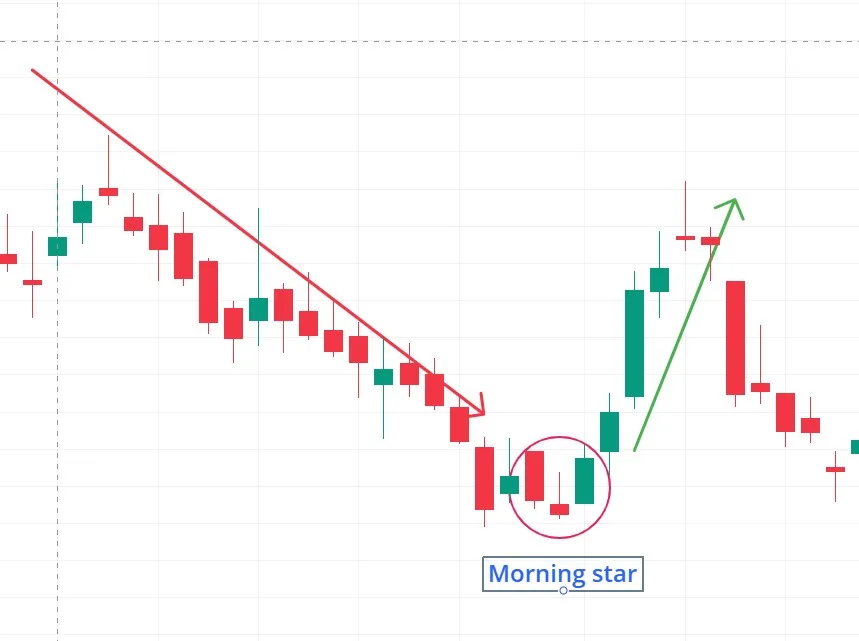
Example with Analysis
- Example (Stock: XYZ):
- After a prolonged downtrend, a long bearish candle forms, followed by a small doji gapping down, and then a strong bullish candle closing above the doji's high.
- Confirmation:
- Next candle continues upward with higher volume.
- Price Behavior:
- BTC enters a new uptrend, gaining 20% over the next week.
Strategic Insights (As Shared by Traders)
Entry & Confirmation
- Traders often wait for the third candle to close before considering an entry.
- Some require the third candle to close above the midpoint of the first candle for stronger confirmation.
Trigger Point & Exit Point Targets
- Many place Trigger Point orders below the low of the second candle.
- Exit Point targets often set at previous resistance levels or using a 1:2 or 1:3 risk-reward ratio.
Risk Management
- Experienced traders risk no more than 1-2% of their capital per trade.
- Avoid trading this pattern in low-liquidity or choppy markets.
Pro Tips
- "The pattern is strongest when the third candle closes near the high of the first candle."
- "Combine with bullish divergence on the RSI or MACD for higher-probability setups."
Common Pitfalls & Cautions
Misinterpretations
- New traders sometimes mistake any three-candle pattern for a Morning Star—the second candle must show indecision.
- Acting without confirmation (e.g., before the third candle closes) leads to false signals.
Expert Advice
- Seasoned traders avoid trading it during major news events or earnings releases.
- Experts recommend checking higher timeframe trends for alignment.
Variations & Similar Patterns
Similar Patterns
- Evening Star (bearish counterpart in uptrends).
- Piercing Line (two-candle reversal, less strong).
Key Difference
- Morning Star includes an indecision candle (doji/spinning top), making it more reliable than two-candle reversals.
Quiz: Trader Knowledge Check
True or False
- A Morning Star pattern is valid if the second candle is a long bullish candle instead of a doji.
- (Answer: False – The second candle should show indecision, typically a small-bodied candle or doji.)
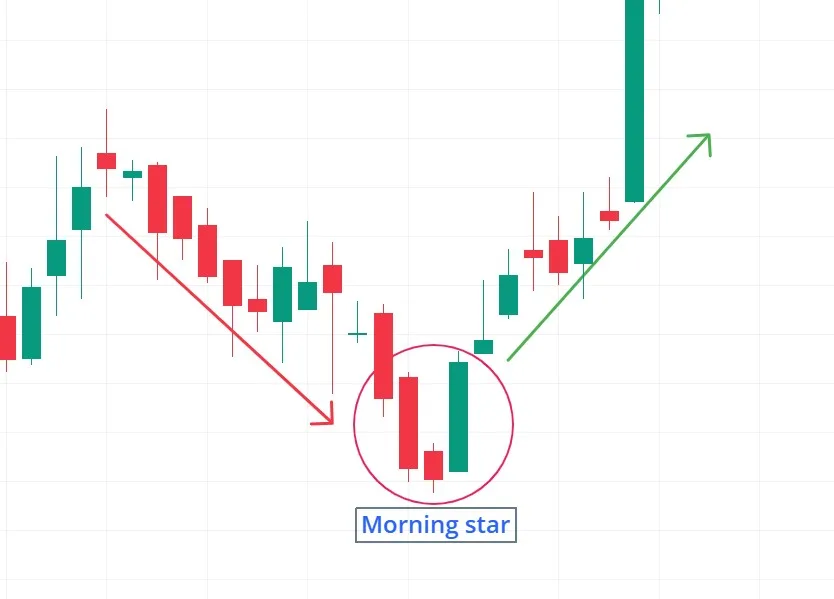
पैटर्न अवलोकन
परिभाषा और प्रकार
- तीन-कैंडल वाला बुलिश रिवर्सल पैटर्न जो डाउनट्रेंड के बाद बनता है
- मंदी से तेजी में बदलाव का संकेत देता है
- सबसे विश्वसनीय उलटफेर पैटर्न्स में से एक माना जाता है
सामान्य विश्वसनीयता
- वॉल्यूम और अन्य संकेतकों से पुष्टि होने पर अत्यधिक विश्वसनीय
- मुख्य समर्थन स्तरों पर या ओवरसोल्ड कंडीशन (RSI <30) में सबसे प्रभावी
गठन और संरचना
गठन
- कैंडल्स की संख्या: 3 (मंदी, अनिश्चितता, तेजी)
- दृश्य विवरण:
- पहली कैंडल: मजबूत मंदी (लाल) कैंडल, डाउनट्रेंड की पुष्टि करती है
- दूसरी कैंडल: छोटे बॉडी वाली कैंडल (डोजी या स्पिनिंग टॉप) जो अनिश्चितता दिखाती है
- तीसरी कैंडल: मजबूत तेजी (हरी) कैंडल जो पहली कैंडल के बॉडी के कम से कम आधे हिस्से में बंद होती है
- मुख्य पहचान मानदंड:
- लगातार डाउनट्रेंड के बाद ही बनता है
- दूसरी कैंडल को पहली कैंडल से गैप डाउन दिखाना चाहिए
- तीसरी कैंडल में मजबूत तेजी का दबाव दिखना चाहिए
मनोवैज्ञानिक व्याख्या
- बाजार भावना:
- प्रारंभिक बिकवाली का दबाव (पहली कैंडल) कमजोर पड़ता है क्योंकि अनिश्चितता बढ़ती है (दूसरी कैंडल)
- खरीदार नियंत्रण लेते हैं (तीसरी कैंडल), जो ट्रेंड उलटफेर का संकेत देता है
- खरीदार बनाम विक्रेता:
- तीसरी कैंडल पर बढ़ता वॉल्यूम खरीदारी में दिलचस्पी की पुष्टि करता है
वास्तविक उदाहरण और विश्लेषण
- उदाहरण (स्टॉक: xyz):
- लंबे डाउनट्रेंड के बाद एक लंबी मंदी की कैंडल बनती है, फिर एक छोटा डोजी (गैप डाउन के साथ), और फिर एक मजबूत तेजी की कैंडल जो डोजी के ऊपर बंद होती है
- पुष्टि:
- अगली कैंडल ऊपर की दिशा में जारी रहती है और वॉल्यूम बढ़ता है
- कीमत व्यवहार:
- BTC नए अपट्रेंड में प्रवेश करता है, अगले सप्ताह 20% की बढ़त दर्ज करता है
रणनीतिक अंतर्दृष्टि (व्यापारियों के अनुभव से)
प्रवेश और पुष्टि
- अधिकांश व्यापारी तीसरी कैंडल के बंद होने का इंतजार करते हैं
- कुछ तीसरी कैंडल के पहली कैंडल के मिडपॉइंट से ऊपर बंद होने की मांग करते हैं
Trigger Point और लक्ष्य
- कई व्यापारी दूसरी कैंडल के निचले स्तर से नीचे Trigger Point लगाते हैं
- लाभ के लक्ष्य अक्सर पिछले प्रतिरोध स्तरों पर या 1:2 या 1:3 जोखिम-इनाम अनुपात पर सेट किए जाते हैं
जोखिम प्रबंधन
- अनुभवी व्यापारी अपने पूंजी का 1-2% से अधिक जोखिम नहीं लेते
- कम तरलता या अस्थिर बाजारों में इस पैटर्न से बचें
प्रो टिप्स
- "जब तीसरी कैंडल पहली कैंडल के उच्च स्तर के पास बंद होती है तो पैटर्न सबसे मजबूत होता है"
- "RSI या MACD पर बुलिश डायवर्जेंस के साथ संयोजन करने से उच्च सफलता दर मिलती है"
सामान्य गलतियाँ और सावधानियां
गलत व्याख्याएं
- नए व्यापारी अक्सर किसी भी तीन-कैंडल पैटर्न को मॉर्निंग स्टार समझ लेते हैं - दूसरी कैंडल में अनिश्चितता दिखनी चाहिए
- बिना पुष्टि के ट्रेड शुरू करने से झूठे संकेत मिलते हैं
विशेषज्ञ सलाह
- अनुभवी व्यापारी प्रमुख समाचार घटनाओं या आय सीजन के दौरान इससे बचते हैं
- विशेषज्ञ उच्च समय सीमा के ट्रेंड की जांच करने की सलाह देते हैं
विविधताएं और समान पैटर्न
समान पैटर्न
- इवनिंग स्टार (अपट्रेंड में मंदी का संकेत)
- पियर्सिंग लाइन (दो-कैंडल रिवर्सल, कमजोर)
मुख्य अंतर
- मॉर्निंग स्टार में अनिश्चितता कैंडल (डोजी/स्पिनिंग टॉप) शामिल होती है, जो इसे दो-कैंडल रिवर्सल से अधिक विश्वसनीय बनाती है
प्रश्नोत्तरी: व्यापारी ज्ञान परीक्षण
True or False
- सही या गलत: मॉर्निंग स्टार पैटर्न तभी वैध होता है जब दूसरी कैंडल एक लंबी तेजी वाली कैंडल हो (डोजी नहीं)।
- (उत्तर: गलत - दूसरी कैंडल में अनिश्चितता दिखनी चाहिए, आमतौर पर छोटे बॉडी वाली कैंडल या डोजी होती है।)