
Chart Pattern
Cup & Handle कप और हैंडल
Cup & Handle = bullish continuation formation shaped like a teacup followed by a short “handle” consolidation. कप एंड हैंडल = कप जैसा U-आकार और छोटा “हैंडल”; अपट्रेंड में तेजी जारी रहने का संकेत।
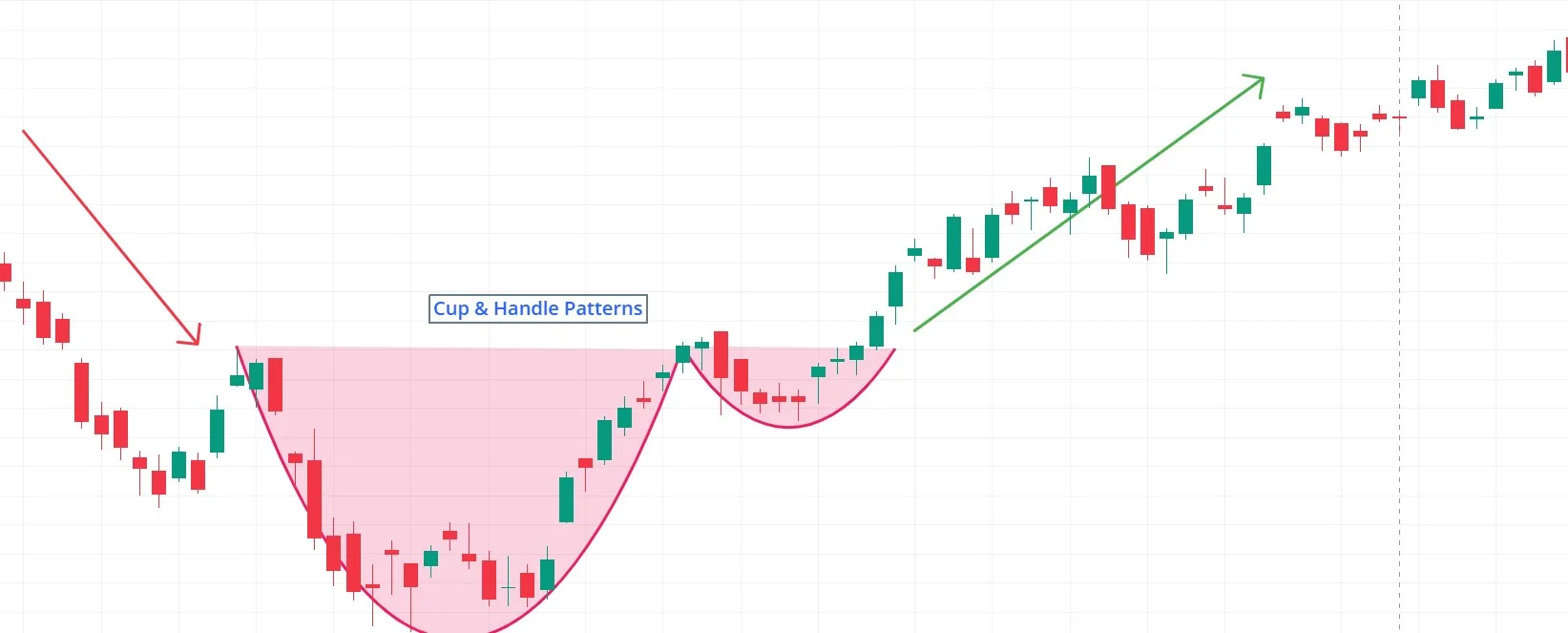
Pattern Overview
Definition & Classification
- Cup & Handle = bullish continuation formation shaped like a teacup followed by a short “handle” consolidation.
- Type: Bullish continuation pattern.
- Reliability: Moderate–high in strong uptrends.
Formation & Structure
Visual Traits
- Cup: smooth U-shaped decline & recovery.
- Handle: 1–4 week drift ≤50 % of cup rise.
- Depth: cup retraces ~30–50 % of prior rise.
- Volume falls in cup, rises on breakout.
Strict Criteria
- Requires established uptrend.
- Cup lows roughly equal & rounded (no V-bottom).
- Handle stays in upper half of cup.
- Breakout above handle confirms pattern.
Psychological Interpretation
- Cup: fear subsides as sellers exhaust; buyers slowly accumulate.
- Handle: weak holders exit, strong bulls defend → breakout sparks FOMO.
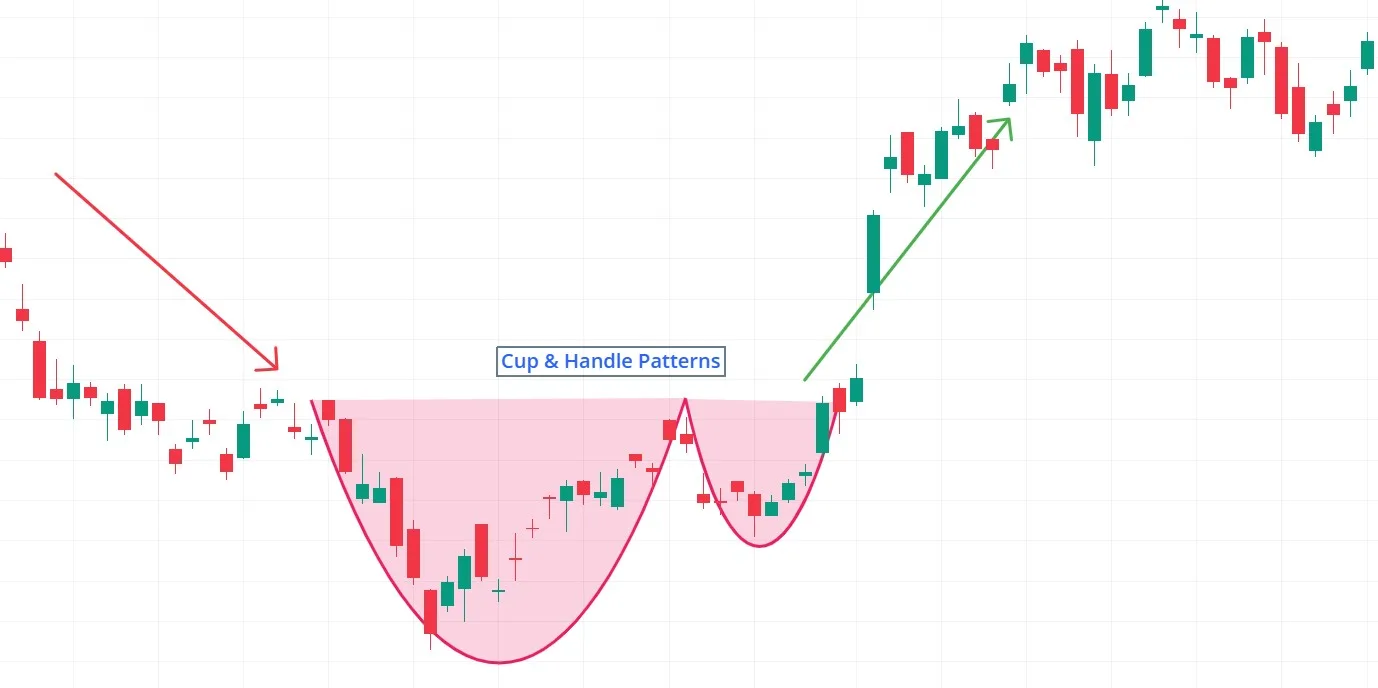
Real-World Example
- XYZ up 40 % → 6-month cup retraces 35 %, 2-week handle → breakout vol ↑ → +25 % rally.
Strategic Insights
Entry & Confirmation
- Enter after close above handle high + volume spike.
- RSI > 50, MACD bullish crossover reinforce breakout.
Targets & Risk
- Target 1: cup depth added to breakout; Target 2: 1.5× cup height or prior resistances.
- Stop-loss: below handle low or cup midpoint.
- Pro Tip: exit if price closes back into cup (failed handle).
Common Pitfalls & Cautions
Frequent Issues
- V-bottoms mistaken for cups.
- Ignoring volume → weak breakouts fail.
- Handles retracing >50 % weaken pattern.
Variations & Similar Patterns
Comparable Patterns
- Rounding Bottom – no handle, slower reversal.
- Double Bottom – two troughs, sharper turns.
- Cup & Handle’s handle offers secondary entry.
Quiz: Trader Knowledge Check
True or False
- The handle in a Cup & Handle must retrace more than 50 % of the cup’s rise to be valid.
- (Answer: False – handle stays above cup midpoint.)
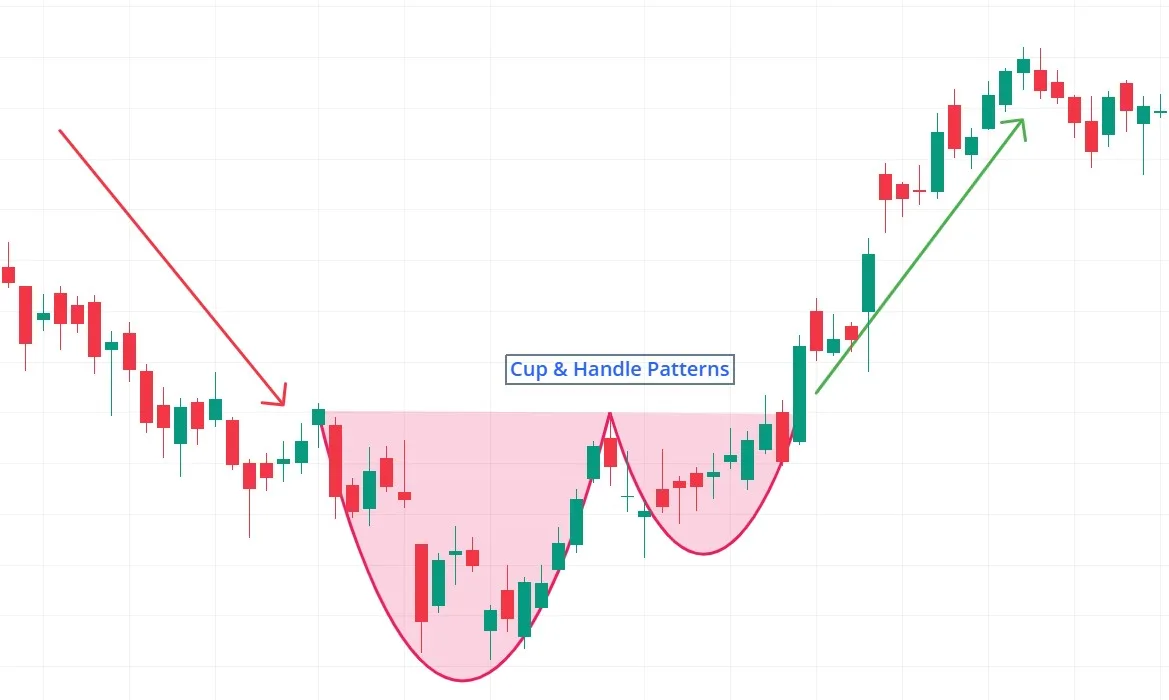
पैटर्न ओवरव्यू
परिभाषा व वर्गीकरण
- कप एंड हैंडल = कप जैसा U-आकार और छोटा “हैंडल”; अपट्रेंड में तेजी जारी रहने का संकेत।
- प्रकार: बुलिश कंटिन्यूएशन पैटर्न।
- विश्वसनीयता: मजबूत ट्रेंड में मध्यम-उच्च।
पैटर्न की संरचना
दृश्य विशेषताएँ
- कप: स्मूथ U-आकार गिरावट व रिकवरी।
- हैंडल: 1–4 सप्ताह छोटा सुधार (<50 %).
- कप गहराई: पिछले अपट्रेंड का 30–50 %।
- वॉल्यूम कप में घटता, ब्रेकआउट पर बढ़ता है।
सख्त नियम
- पहले अपट्रेंड होना चाहिए।
- कप का तला गोल, लगभग समान लो।
- हैंडल, कप के ऊपरी आधे से नीचे न जाए।
- हैंडल रेजिस्टेंस के ऊपर ब्रेकआउट पुष्टि करता है।
मनोवैज्ञानिक व्याख्या
- कप: बेचने वालों की थकान, डर घटता; खरीदार धीरे-धीरे जमा होते हैं।
- हैंडल: कमजोर हाथ निकलते, मजबूत बुल्स सपोर्ट करते → ब्रेकआउट पर FOMO।
वास्तविक उदाहरण
- XYZ 40 % चढ़ा, 6-महीने का कप (35 % रिट्रेस) + 2-सप्ताह हैंडल → वॉल्यूम ब्रेकआउट → 25 % तेजी।
रणनीतिक सुझाव
एंट्री और पुष्टि
- हैंडल हाई के ऊपर क्लोज व वॉल्यूम स्पाइक पर एंट्री।
- RSI > 50 व MACD बुलिश क्रॉसओवर से पुष्टि।
लक्ष्य व जोखिम
- लक्ष्य-1: कप गहराई को ब्रेकआउट में जोड़ें; लक्ष्य-2: 1.5× कप ऊँचाई।
- स्टॉप-लॉस: हैंडल लो या कप मिडपॉइंट के नीचे।
- प्रो टिप: प्राइस कप में लौटे तो ट्रेड छोड़ें।
सामान्य गलतियाँ व सावधानियाँ
आम समस्याएँ
- V-शेप को कप समझ लेना।
- वॉल्यूम अनदेखा → ब्रेकआउट फेल।
- हैंडल 50 % से गहरा हो तो पैटर्न कमजोर।
विविधताएँ व समान पैटर्न
तुलनीय पैटर्न
- राउंडिंग बॉटम – हैंडल नहीं।
- डबल बॉटम – दो तलों वाला।
- हैंडल एक दूसरा एंट्री पॉइंट देता है।
क्विज़: व्यापारी ज्ञान परीक्षण
True or False
- सही या गलत: कप एंड हैंडल में हैंडल, कप की रिकवरी का 50 % से अधिक रिट्रेस होना चाहिए।
- (उत्तर: गलत – हैंडल कप के मध्य से ऊपर रहता है)।