
Chart Pattern
Bump and Run बंप और रन
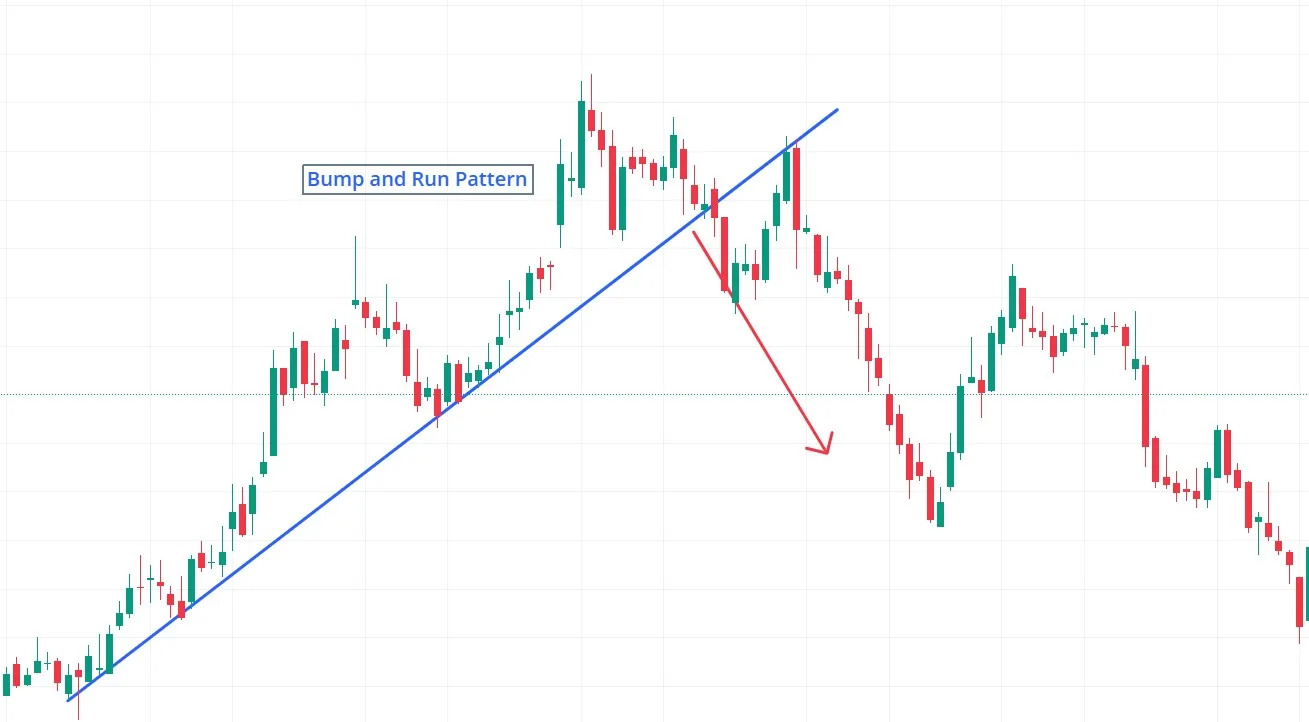
Bump-and-Run = sharp “bump” (parabolic surge) followed by trendline break and “run” lower, signalling exhaustion of prevailing trend. बम्प-एंड-रन = तेज़ “बम्प” के बाद ट्रेंडलाइन ब्रेक व तेज गिरावट (“रन”), मौजूदा ट्रेंड की थकावट दिखाता।
Pattern Overview
Definition & Classification
- Bump-and-Run = sharp “bump” (parabolic surge) followed by trendline break and “run” lower, signalling exhaustion of prevailing trend.
- Type: Bearish reversal after uptrend (occasionally bullish after downtrend).
- Reliability: high in over-extended, speculative moves.
Formation & Structure
Phases & Visual Traits
- Lead-in: steady uptrend with moderate slope.
- Bump: near-vertical price surge, ≥2× lead-in slope.
- Run: breakdown below lead-in trend-line, sharp sell-off.
- Bump candles: large green bodies, small wicks, volume spike.
- Run candles: large red bodies breaking trend-line.
Strict Identification Criteria
- Established uptrend precedes pattern.
- Bump slope ≥2× lead-in trend slope.
- Volume spikes during bump, fades, then rises on breakdown.
- Closing break below lead-in trend-line confirms pattern.
Psychological Interpretation
Sentiment Shift
- Lead-in: smart money accumulation, steady optimism.
- Bump: retail FOMO, greed-driven buying frenzy.
- Run: panic selling as trapped late buyers exit.
Real-World Example (XYZ)
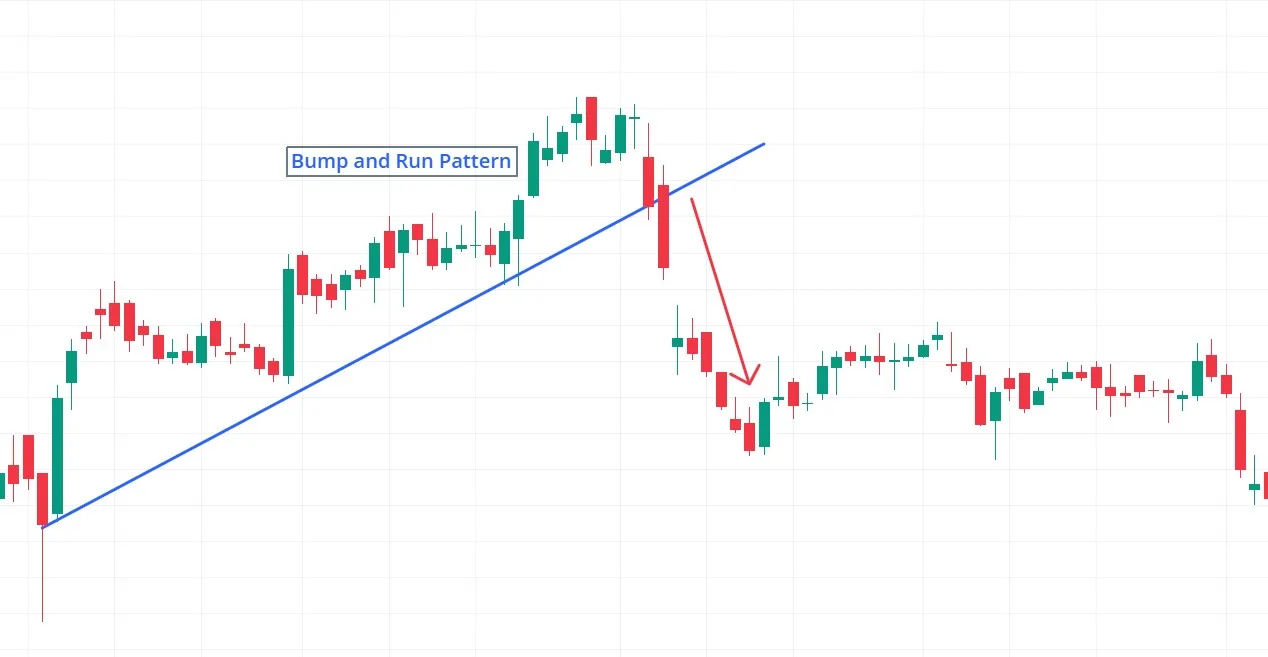
- Lead-in uptrend; bump = +80 % in 5 days.
- RSI >80, volume divergence at top.
- Breakdown below lead-in line → −50 % in following weeks.
Trading Strategy
Entry & Confirmation
- Short after candle closes below lead-in trend-line with volume spike.
- RSI/Stochastic divergence & bearish MACD crossover strengthen signal.
Targets & Stops
- Target-1: nearest swing low before bump.
- Target-2: 50–61.8 % retrace of bump leg.
- Stop-loss: above bump peak (highest high).
- Retest of broken trend-line offers secondary entry.
Pitfalls & Warnings
Common Mistakes
- Confusing normal pullback with bump-and-run.
- Entering without volume confirmation.
- Trading in sideways / low-volatility markets.
Variations & Similar Patterns
Comparable Patterns
- Parabolic Blow-Off – no distinct lead-in phase.
- Head & Shoulders – structured peaks, neckline break.
- Bump & Run unique: slope comparison, trendline focus.
Quiz: Trader Knowledge Check
True or False
- The Bump-and-Run pattern is only valid if the bump phase contains at least three large bullish candles.
- (Answer: False – validity depends on slope & trendline break, not candle count.)
पैटर्न का सारांश
परिभाषा व वर्गीकरण
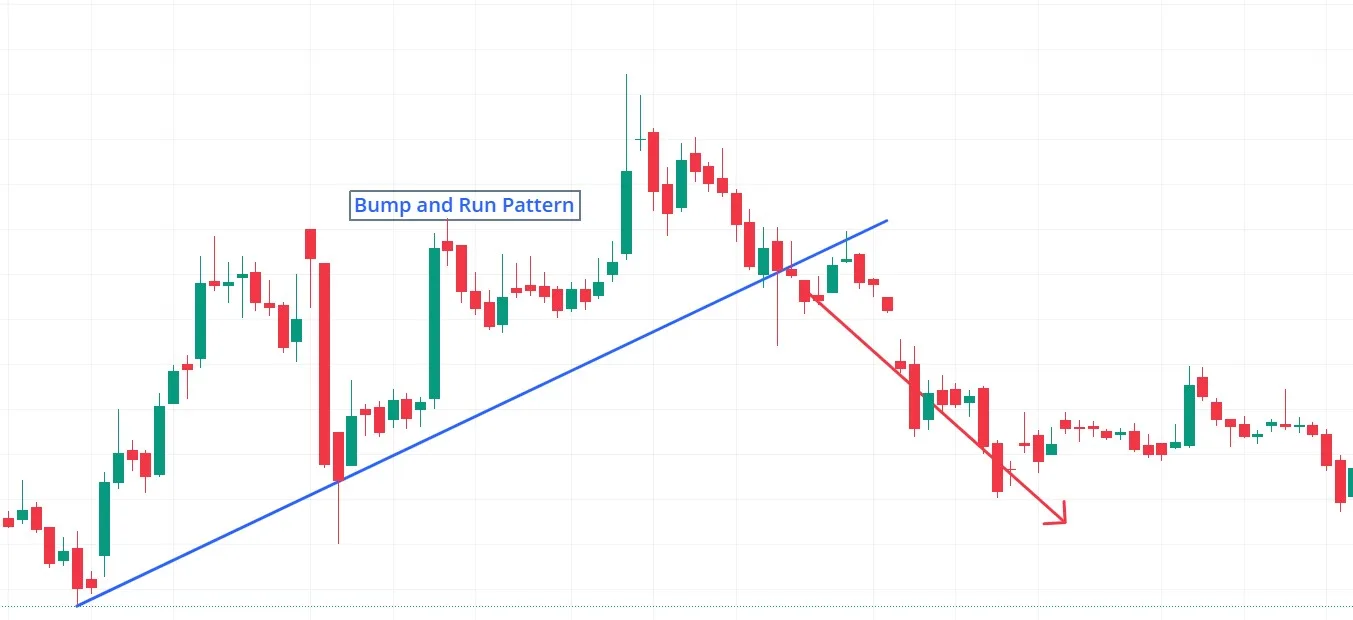
- बम्प-एंड-रन = तेज़ “बम्प” के बाद ट्रेंडलाइन ब्रेक व तेज गिरावट (“रन”), मौजूदा ट्रेंड की थकावट दिखाता।
- प्रकार: अपट्रेंड के बाद बेयरिश रिवर्सल (कभी-कभी डाउनट्रेंड में बुलिश)।
- विश्वसनीयता: अति विस्तार वाले मार्केट में उच्च।
पैटर्न की संरचना
चरण व दृश्य विशेषताएँ
- लीड-इन: मध्यम ढलान वाला बढ़ता ट्रेंड।
- बम्प: लगभग खड़ी तेजी, लीड-इन से ≥2 गुना तीव्र।
- रन: लीड-इन ट्रेंडलाइन के नीचे तेज गिरावट।
- बम्प पर बड़े हरे कैंडल, छोटी विक्स, वॉल्यूम स्पाइक।
- रन पर बड़े लाल कैंडल, ट्रेंडलाइन ब्रेक।
सख्त पहचान मानदंड
- पहले स्पष्ट अपट्रेंड हो।
- बम्प की ढलान, लीड-इन से कम से कम दोगुनी तेज।
- बम्प पर वॉल्यूम बढ़े, फिर घटे, ब्रेकडाउन पर फिर बढ़े।
- लीड-इन ट्रेंडलाइन के नीचे क्लोज पर पुष्टि।
मनोवैज्ञानिक विश्लेषण
भावनात्मक बदलाव
- लीड-इन: स्मार्ट मनी की धीरे-धीरे खरीदारी।
- बम्प: खुदरा FOMO, लालच भरी खरीद।
- रन: फंसे खरीदारों की घबराहट बिकवाली।
वास्तविक उदाहरण (XYZ)
- लीड-इन अपट्रेंड; बम्प 5 दिन में +80 %.
- RSI >80, वॉल्यूम डाइवर्जेंस।
- ट्रेंडलाइन ब्रेक के बाद कुछ हफ्तों में −50 %.
ट्रेडिंग स्ट्रैटेजी
एंट्री और पुष्टि
- लीड-इन ट्रेंडलाइन के नीचे क्लोज + वॉल्यूम स्पाइक पर शॉर्ट।
- RSI/स्टोच डाइवर्जेंस व MACD क्रॉसओवर संकेत मजबूत करते।
लक्ष्य व स्टॉप-लॉस
- लक्ष्य-1: बम्प से पहले का स्विंग लो।
- लक्ष्य-2: बम्प का 50–61.8 % रिट्रेसमेंट।
- स्टॉप-लॉस: बम्प के उच्चतम पॉइंट के ऊपर।
- रीटेस्ट पर दूसरी एंट्री का अवसर।
गलतियाँ व चेतावनी
आम गलतियाँ
- साधारण पुलबैक को बम्प-एंड-रन समझना।
- वॉल्यूम पुष्टि बिना एंट्री।
- लो-वोलेटिलिटी साइडवेज़ में ट्रेड करना।
विविधताएँ व समान पैटर्न
तुलनीय पैटर्न
- पैराबॉलिक ब्लो-ऑफ – लीड-इन नहीं।
- हेड-एंड-शोल्डर्स – स्पष्ट नेकलाइन।
- बम्प-एंड-रन = ढलान तुलना व ट्रेंडलाइन ब्रेक।
क्विज़
True or False
- सही या गलत: बम्प-एंड-रन पैटर्न तभी वैध है जब बम्प में कम से कम तीन बड़ी बुलिश कैंडल हों।
- (उत्तर: गलत – वैधता ढलान व ट्रेंडलाइन ब्रेक पर निर्भर करती है)।